We Tested the 7 Best Handheld Retro Gaming Emulators in 2026
Michal ElyasafJul 283 min read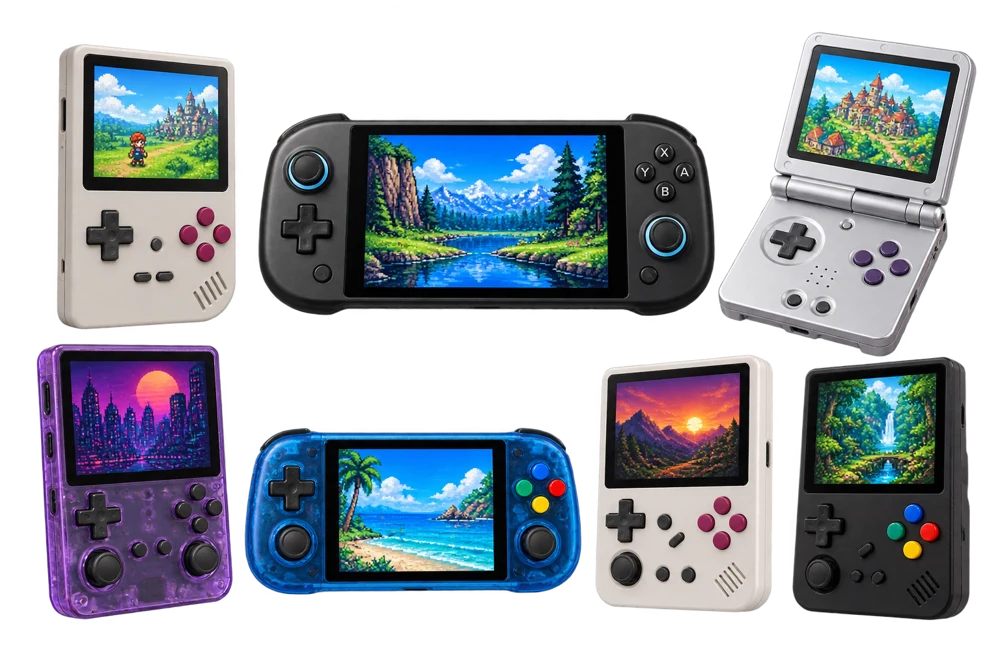
Retro handhelds have exploded, and the gap between a $40 pocket player and a console-grade emulator is huge. We tested a spread of devices across classic 2D systems up to demanding 3D emulation to find the right pick for each budget. Here's where to spend.
Quick verdict
The Anbernic RG35XX Plus is the best budget retro handheld for classic 2D systems, while the Retroid Pocket 5 is the best overall for its bright screen and strong 3D emulation. For the most power the Ayn Odin 2 leads, and the Miyoo Mini Plus is the best truly pocketable option.
Shop this comparison
As an Amazon Associate, we earn from qualifying purchases. These links identify the specific variants shown below; check Amazon for current prices, sellers and availability. Other models discussed remain included for comparison.
| Linked model / variant | Use in this comparison | Product page |
|---|---|---|
| Anbernic RG35XX Plus, gray | best budget pick | View on Amazon ↗ |
| Miyoo Mini Plus, black | best pocketable | View on Amazon ↗ |
The best retro gaming handhelds, ranked
1. Retroid Pocket 5 — best overall
Best for: players who want strong emulation and a premium screen.
The Pocket 5's large, vivid AMOLED display and capable chipset handle everything from 8-bit classics up through more demanding systems with ease. It hits a sweet spot of power, comfort, and price that's hard to match.
2. Anbernic RG35XX Plus — best budget pick
View Anbernic RG35XX Plus, gray on Amazon ↗
Best for: newcomers focused on classic 2D consoles and handhelds.
The RG35XX Plus nails retro 2D and early portable systems in a clean, affordable body with good battery life. It's the easiest low-cost way to carry decades of classic games in your pocket.
3. Ayn Odin 2 — best for demanding emulation
Best for: enthusiasts pushing into heavier 3D systems.
The Odin 2's flagship-class processor makes it the go-to for the most demanding emulation this side of a PC. It costs more, but nothing in the handheld space feels as future-proof.
4. Miyoo Mini Plus — best pocketable
View Miyoo Mini Plus, black on Amazon ↗
Best for: people who want the smallest possible classic player.
The Mini Plus is tiny, charming, and beloved for its crisp screen and thriving custom-firmware community. It focuses on 2D and light 3D, so treat it as a purist's pocket companion.
5. Anbernic RG556 — best big-screen Android handheld
Best for: players who want a large AMOLED and Android flexibility.
The RG556's roomy AMOLED screen and Android OS make it great for both emulation and streaming apps. Its size trades pocketability for a more immersive picture.
6. Analogue Pocket — best for cartridge purists
Best for: collectors who want to play original cartridges accurately.
The Analogue Pocket uses an FPGA to play original Game Boy-family cartridges with remarkable fidelity on a stunning high-resolution screen. It's a premium, preservation-minded device rather than a do-everything emulator.
7. Powkiddy X55 — best value big screen
Best for: budget buyers who want a larger display.
The X55 pairs a big, bright screen with solid 2D and moderate 3D performance at a friendly price. It's a strong pick if you want screen real estate without spending flagship money.
Frequently asked questions
Which retro handheld should a beginner buy first?
Start with an affordable, well-supported device focused on 2D systems, like the Anbernic RG35XX Plus. It runs the vast catalog of classic consoles smoothly and lets you learn the hobby before investing in a pricier 3D-capable handheld.
Do these handhelds come with games?
Devices ship with the hardware and firmware, not with commercial game libraries. You are responsible for supplying game files legally, typically by dumping cartridges and discs you already own, since downloading copyrighted games you don't own is illegal.
What's the difference between emulation and FPGA handhelds?
Emulation uses software to imitate old hardware and runs on most handhelds, while FPGA devices like the Analogue Pocket recreate the original chips in reconfigurable hardware. FPGA can offer higher accuracy and lower lag, and the Pocket also plays real cartridges.
How powerful a handheld do I need for 3D systems?
Heavier 3D platforms demand a stronger processor, so step up to a device like the Retroid Pocket 5 or Ayn Odin 2 for smooth performance. Budget handhelds excel at 2D but struggle with the most demanding 3D titles.
Last updated: July 2026.